
School of Girls
I remember that years ago, I had a dream of wondering through an abandoned hobbit-style village whose houses each had a clock mounted in its face; the minute hand of each was missing. At the far end, there was a tunnel in the hillside sealed by with a gate. I ventured near the entrance but the air was so unnaturally cold and the tunnel so unnaturally dark, I concluded that I had no good purpose within and decided to leave. Then the darkness from the tunnel reached out and drew me within.
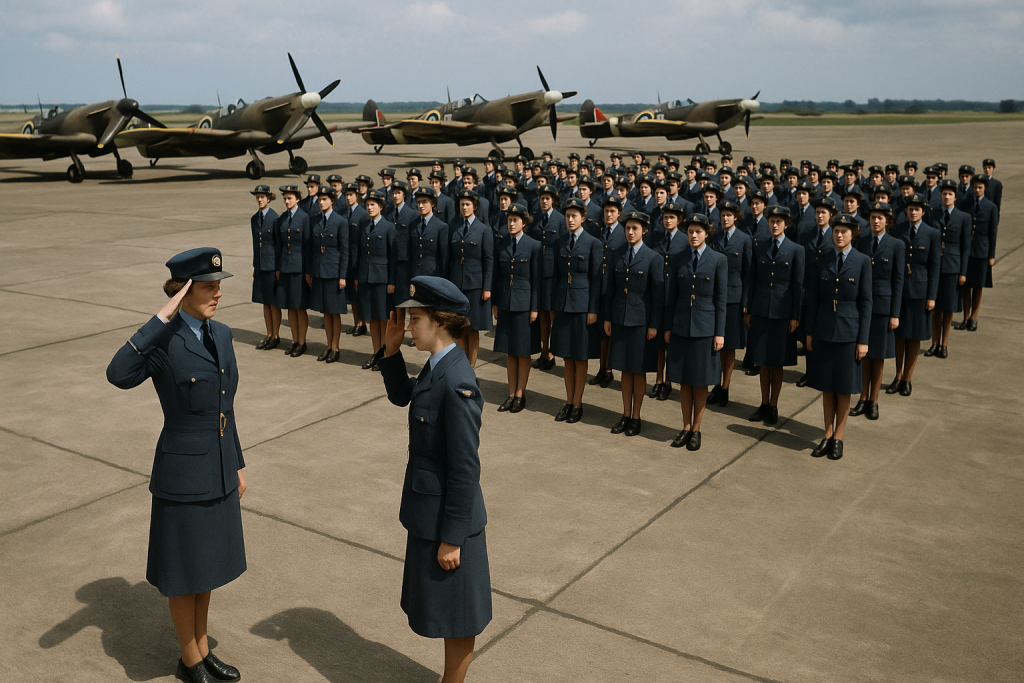
I came to awareness on an airfield in the 1940s (but perhaps the 1950s). There were a hundred WAACs standing in formation. I was a senior female officer; I approached to stand before them as though I were to perform some official review or give a speech; I thought that I had returned to my Alma Mater. Another officer approached me, one whom I recognised as a former schoolmate. She asked, “How old are you now, Anne?” I thought she knew well my age, since it was the same as hers. I thought that I must have gotten off the timeline we once shared and that there was therefore some possibility that I’d been away overly long. Concentrating on this made me awaken.
Wilful Forgetting
It seems as though I’ve had some long history with these women, but I cannot remember, or I cannot bring myself to remember. If there is something to remember, I know it must be unpleasant; women in earlier ages did not have pleasant lives. And yet, it seems to me that remembering the details cannot be the goal; we are in hell merely because our attention is the kind that is attracted to dark events: we cannot help but look whenever tragedy or scandal occur. This locks us into a reality in which tragedy and scandal can occur. I have learned this satisfactorily from dreams; we might have nightmares for any number of reasons, but we experience them only because we look at them.
Dreambliths
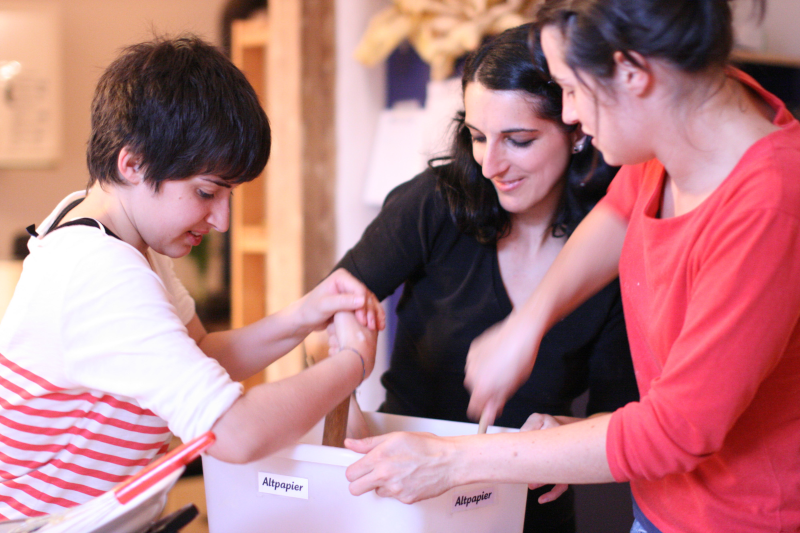
The opposite of a nightmare is to something I call a dreamblith. I had to invent a word because English does not provide one. Something groovy is going on — it can be something as simple as baking a cake — but all participants are happy to be involved and eager to make the experience more pleasant for everyone else. Things might go wrong, but it is within the power of the participants to do something about it. The very fact that they must fix things means they are not turning someone else’s crank; they celebrate their agency. This is a world of poles of attraction and of allies and apprentices.
It is a liberation to love, yet we struggle to find objects and events worthy of love. But here is the trick: The concept of worthiness is itself an artefact of a dark world. In a dreamblith, love does not require an object; that kind of love is a grooviness that notices opportunities for more grooviness.
I think there are two solutions for people trapped in dark worlds. The first is to love what you create, however small must it be. It can be as small as your home or your hobby. The second is to love others who are similarly seeking a path out of hell, they that have no superseding project.
I think this qualifier is important. There are religions that tell us to love everyone, but these are religions that are responsible for much brutality. The wicked might well wish to be loved, and to convince others that there exists some supernatural obligation — but what else would one expect from the wicked? They must try.
Grooviness is the appropriate metric. Grooviness is any self-reinforcing pleasurable activity, regardless of what the activity is. The real criterion — what makes grooviness groovy — is whether there be a virtuous cycle. Does grooviness lead to more grooviness? This is why one must seek out other groovy people, and no others may do.
A Hopeless Situation
The women in my dreams are mostly from the past 200 years. They are from times in which a woman stood to inherit relatively little from civilisation. They were obedient to avoid punishment, not to receive rewards. They were relegated to civilisation’s support staff, at best.
Such a woman could come to understand that civilisation is of no advantage to her. She might well suffer and survive briefly without it. If there is any advantage, it is the one she provides to civilisation. It occurs to me that humans, in general, are in such a hopeless situation. There is no way for us to make good our existence in this world. We cannot escape its harshness nor its injustice. In the end, even our own bodies betray us. There is nothing for us to invest in. There is only the possibility of some temporary inner escape.
The logic of Schools
There is a logic of schools that a school teaches according to the needs of the civilisation that created it, not of the students within. The needs of the students have no primacy — and why should they? Anything which does not put the civilisation in a position to create schools does not result in schools. The problem is perceptible only where the problem is possible.
I think this is why I dream so often of being a girl in a school with other girls; it is unpleasant and serves only to prepare us for greater unpleasantness. Our only solace is each other. We are equal in our suffering and bewilderment. She, who rejects this, has no choice but to provide the opposite to her peers. In the end, I doubt that there be anything for me to remember, other than this, the fundamental human enterprise.