
Femtocracy
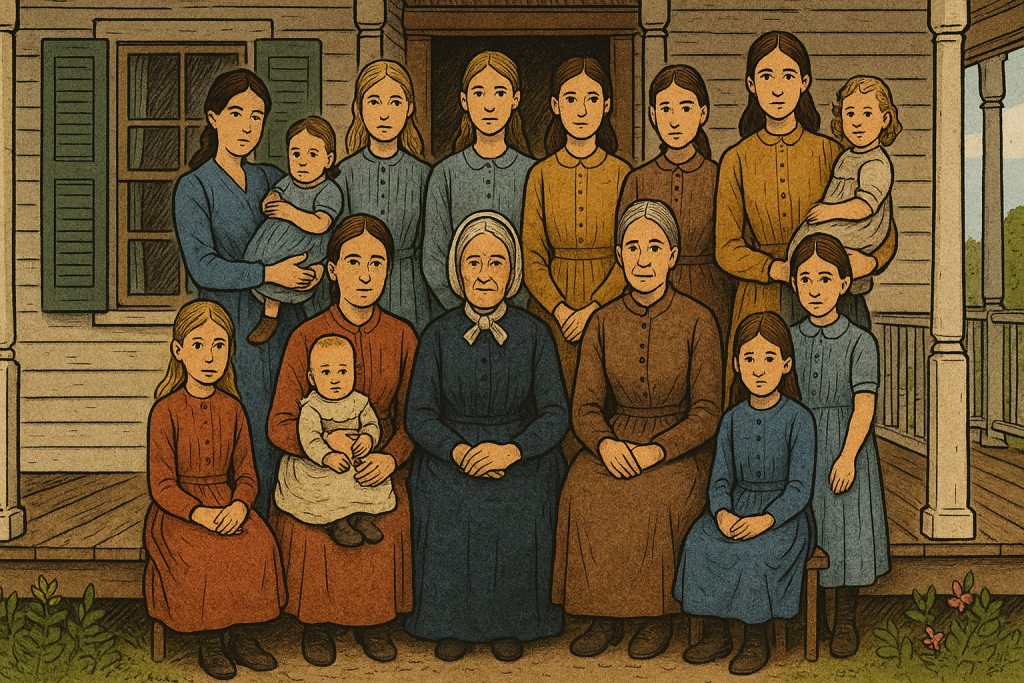
There is something called feminism which I have difficulty understanding. It has something to do with equal rights in a world created by men for the benefit of men. It is not at all clear what is feminine about this.
Male-dominated economies prioritise the accumulation of power and wealth over the basic needs of women and their families. There are states that are home to millionaires where the tap water of some towns is unsafe to drink. What mother would want this?
It is clear from history that whatever is good for women and their children is good for everyone. When women are given the means, they invest in safe drinking water for their children. Women do not invest in casinos and rockets before these basic needs are met. Everyone benefits from safe drinking water, while very few benefit from rockets and casinos. A patriarchy, especially one turbo-charged by capitalism, does not best serve the interests of humanity. At some advanced level of development, it might well be the main threat to humanity. There is a clear need for a feminism that does not insist on participating equally in the craziness.
What is a feminism based on female values? What I mean by female values here has nothing to do with gender stereotypes, but rather, the well-being of women and children, and the ideas that lead to that one outcome.
Working Style
There is a female working style, which deserves a name and which deserves institutionalisation. When a team is half or more male, the themes of competition and dominance arise subtly or less subtly, to define the culture of the working group. There are leaders, there are followers, there is responsibility and blame. When a team is 60% or more female, coöperation becomes the defining theme. There is no impulse to give the most important tasks to the most important people; tasks are distributed according to ability.There is less emphasis on blame and more emphasis on recovery. A person who is a leader in one area of responsibility is can easily be a follower in another. Good ideas can come from any quarter.
There needs to be a way for a company to announce to job candidates, “Our working groups are femcentric,” in order to attract the male and female candidates most disposed to participating in them. This is a cost-free feature that can make a workplace far more attractive than integrated cafeterias or even air-conditioning.
Networking
Women were the internet before the internet became electric. While men ridiculed women for being gossiping, men were dependent on it for situational awareness. Who has an axe sharpener that one might use? Who is facing financial difficulty and could be coaxed into selling land? Who repaired his boots recently and might therefore help you repair your own? This information is what allows connections to be formed, and for societies based on interconnection to be created. This is a very different vision of humanity than the modern form, which is merely the buying and selling of goods and ideas. Interdependencies between families seem quite quaint and unrelated. And yet it is precisely these interdependencies that make allies in times of crisis. Modern society seemingly flounders in any crisis for which there is no profitable solution.
Health Care
Women have been the living repository of humanity’s health care knowledge for nearly all of its history. Very few women now carry that torch due to modern liability concerns. Giving out medical advice without authorisation has legal consequences.
Modern health care is expensive. To get it, a mother must work away from her children. This is not actually the most responsible solution, in as much as a mother’s chronic absence leads to problems of different kinds.
One can see a hybrid approach by looking at Switzerland’s health care system. Health care in Switzerland is expensive, and it is privately-funded. However, there is a pharmacy system that operates at the first line of reception. Would-be patients first consult their pharmacists, where a large number of problems can be treated with a little trial and error. The pharmacist is quick to refer the customer to a medical doctor when the case is serious enough to warrant it. But the upshot is this: clinics and hospitals have less traffic.
This is a model for a femcentric society. For example, kidney stones, when diagnosed early, may be treated with dietary restrictions and exercise. In fact, there is no other means of responding to such an early diagnosis. This costs nothing and is most easily diagnosed by a wife or mother. A late diagnosis is handled by the professional health care system.
There was a time when mothers, grandmothers, aunts, and sisters consulted each other about family cases and did their best to deal with them. There were times and places in history in which this was the only affordable or available option.
Food
It not acceptable for women to be locked in kitchens, but the health and well-being of their children is dependent on food, and that means it is a topic of feminism.
Highly-processed food has negative health consequences. High-fructose drinks have negative consequences. Childhood obesity has quadrupled in the past forty years. Some one has fallen asleep at the steering wheel.
Dangerous food ought to be forbidden or heavily taxed; it is an obvious duty of mothers to protect their children from any and all persistent harm.
Negative Expenses
Prior to the industrial revolution, women had very few career options. What they could do was create negative expenses. Income not spent on an acquisition is the same as income received and spent. For example, 19th century farm wives produced very little trash; they were consummate recyclers. Clothes were mended by hand, and when beyond mending, were turned into rags, and when these were beyond use, were woven into mudroom rugs.
Food scraps were thrown into an on-going stew and cooked until unrecognisable and newly edible. Gardening and canning put healthy food on the table without the need for currency.
Women had the habit of knitting while chatting, and the habit of knitting was such that it was barely noticed. Compare this to Netflix, which is the opposite of socialising, which produces no clothing, and which is an actual expense.
Society must recognise that negative expenses are just as real from a book-keeping perspective as income. It is a profession, and it is an environmentally responsible profession. Everyone ought to take it up, but for women who must deal with infants at home, these are obvious skills to master and pass down.
Matrilineal ownership of residences
There are good reasons that residential property should be bequeathed matrilinealy. These are described in The Salt Island Diaries, so here I would just say that there ways of doing things that are good for both boys and girls, and if men are reluctant to institutionalise them, then at least women ought to implement them where they can.
Smashing
In 19th century colleges, it was very common for incoming students to seek out mentorships with senior students. These were passionate relationships, involving infatuation, possessiveness, and the exchange of heady letters and oaths. The rate of homosexuality was not greater than the background rate, but the intensity could reach the same level. Smashing relationships evidently had a healthy effect on college culture; they encouraged students to make themselves attractive according to their talents, and to be valued for those talents.
These relationships were familiar to the earliest students, which suggests that the practice was a girlhood expectation at the time. This was apparently a part of human culture that was documented only when there were women with the literacy to do it themselves. Once it was discovered, it was crushed by a fearful patriarchy. Modern women do not even snicker at this antiquated practice; the very notion has been erased from mainstream thought.
Summary
There are things that feminism can mean that do not reference the priorities and practices of men. If these threaten men’s power and profitability, these are fair losses for them to take, if it means a sustainable future for them.