Consumer freedom
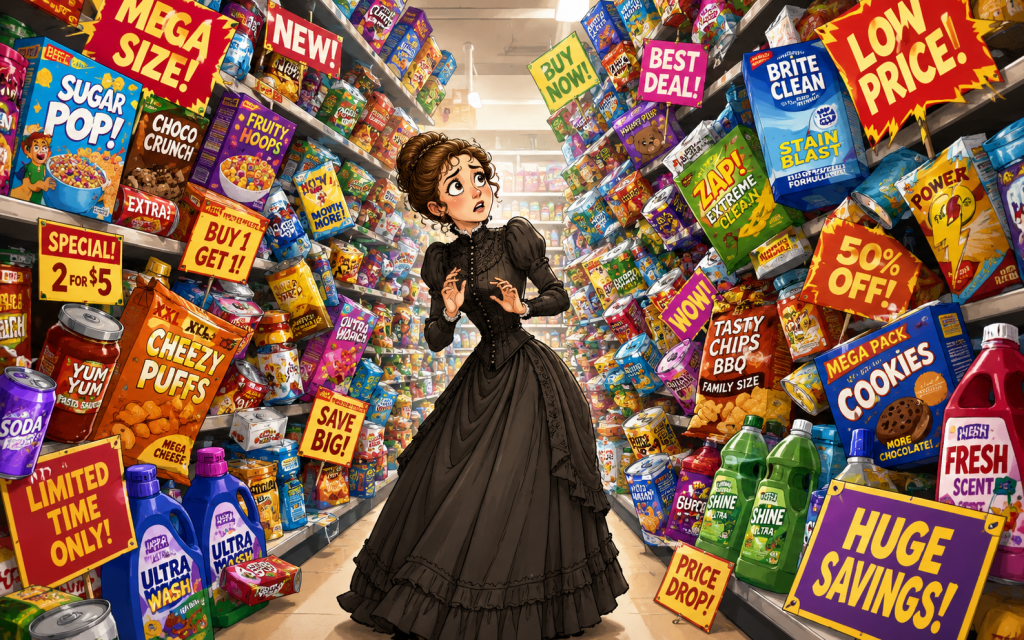
There is a pervasive belief in the West that freedom means having many choices. Yet, there is reason to believe the opposite: that it be a system of control.
Contrary to the common belief that flipping between videos alleviates boredom, a 2024 study shows that swiping between short clips or fast-forwarding leads to higher levels of boredom and reduced satisfaction.
In 1949 the average grocery store stocked 3700 products, the average supermarket today has 45000 products.
Economist Deirdre McCloskey estimated in 2006 that the variety of consumer choices available to the average person is approximately 100 million times greater than in preindustrial societies.
What conceivable utility does this serve?
Every moment you spend making consumer choices is a moment that you are not working on your zen — which is the only thing that can lead to long-term satisfaction. When tomorrow’s next bargain or the latest fashion or your neighbor’s purchases can affect your satisfaction, your happiness becomes dependent on choices that others make. You have lost your agency. The flood of choices has paradoxically made you less free.
A plethora of consumer choices is a mental ghetto — a place where addicts seek quick highs from new features and better bargains. You can never get well. The solution? Another purchase.
Instead of simply choosing something that is good enough, we try to maximise what we can get with the money we have; we want the best possible instead of what merely satisfies our needs. This priority usually leads to disappointment. Fortunately, the disappointment can be overcome by fulfilling some new desire. See the beginning of this paragraph.
Imagine a dark religion in which enlightenment is a sin. How could that religion be run differently than the way capitalism is run? And how is capitalism not the one true state religion?
If, in the coming years, someone proposes fewer, locally-produced products as a solution to rampant-capitalism, please do not react by defending your ‘freedom’.