
The Fundamental Perversion
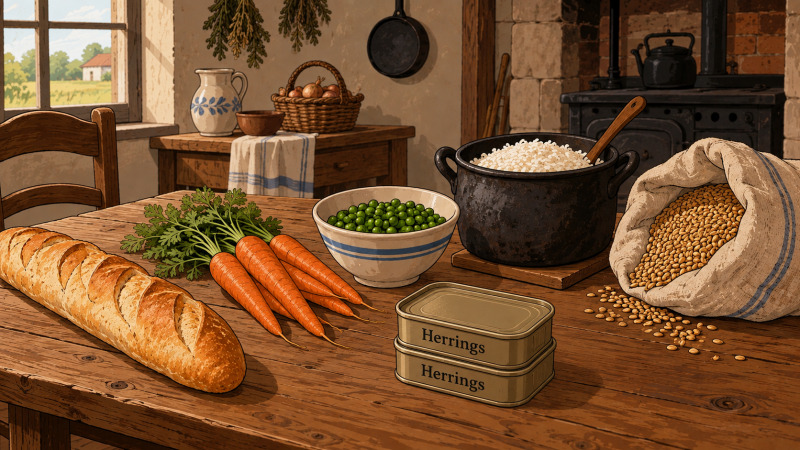
I have had weeks in which I (accidentally) maintained a simplified diet – usually just home-baked bread, canned fish, rice, peas, carrots, give or take a few items. This usually happened due to having eaten all the fun stuff and having put off shopping too long. When the supermarket is 13 km away, delays proliferate. Here I learned that there is a psychological difference between balanced nutrition and imbalanced nutrition. I notice that I lost during those weeks the urge to snack. I did not yearn to go to a restaurant. It seemed that the problem of food had been settled. I thought about other things.
As soon as I would get into a bag of petrol station crisps, the truce would end. Once ended, it was easy to forget that it had even happened.
Now, on the other side, I see that it is satisfying to want a snack and then to get that snack. It is much more interesting than not wanting one and not getting one, even if the end result — not wanting — is the same.
It is a perversion, and perhaps the fundamental one.

I sometimes have false awakenings in which I believe I am another person in another point in history. The problems and the fears that that person has, I believe to be my own; I take them quite seriously. The kinds of petty domestic scandals that I ordinarily find ridiculous seem quite compelling in the context of a life that makes them likely. Parents with wayward children wring their hands. Women with inconstant lovers cry. A boy who has lost a favourite toy is devastated.
Some of the problems that people faced in the past were quite serious, like getting enough to eat and staying warm in winter. Nevertheless, life- and health-threatening problems were not enough. The overwhelming majority of problems were moral — for example, impiety, homosexuality, a woman wearing her hair down, or even worse, wearing pants. It is mind-blowing to consider that people who had poor chances of living past forty ever worried about things that were not life-threatening.
There seems to be a common drive to seek out and dramatise problems which we may then struggle with. Why? It is fear of spanking — or the experience of a faith-affirming, order-restoring spanking — that rescues and directs impoverished attention. A loose cannonball does not stop rolling until it hits a bulwark.
I dreamt last week that I was in a consumer electronics store with a dream companion. I came upon an all-in-one radio. This device received all frequencies, plus could transmit on short-wave or citizens’ band. I noticed that in the center of the face was a raised baffle vent with the letters “SISS” embossed in the plastic. I did not recognise the brand, but Chinese brands come and go with such frequency, I recognise few of them anyway. I told my dream companion that this unit would be ideal for a post-civilisation lifestyle. She said that it was a disreputable brand and that one would do best to avoid it. We left without further discussion. When I awoke, I looked up the brand on the internet. It turns out that the brand to be avoided is “Self-Induced Stress Syndrome.”
Now, I am forced to reconsider my own situations. The worst is having enough awareness to see one’s own mental poverty, but being too mentally impoverished to do anything about it.